What Is a Container Pool? 2025 Guide on Design, Materials, Installation & Benefits

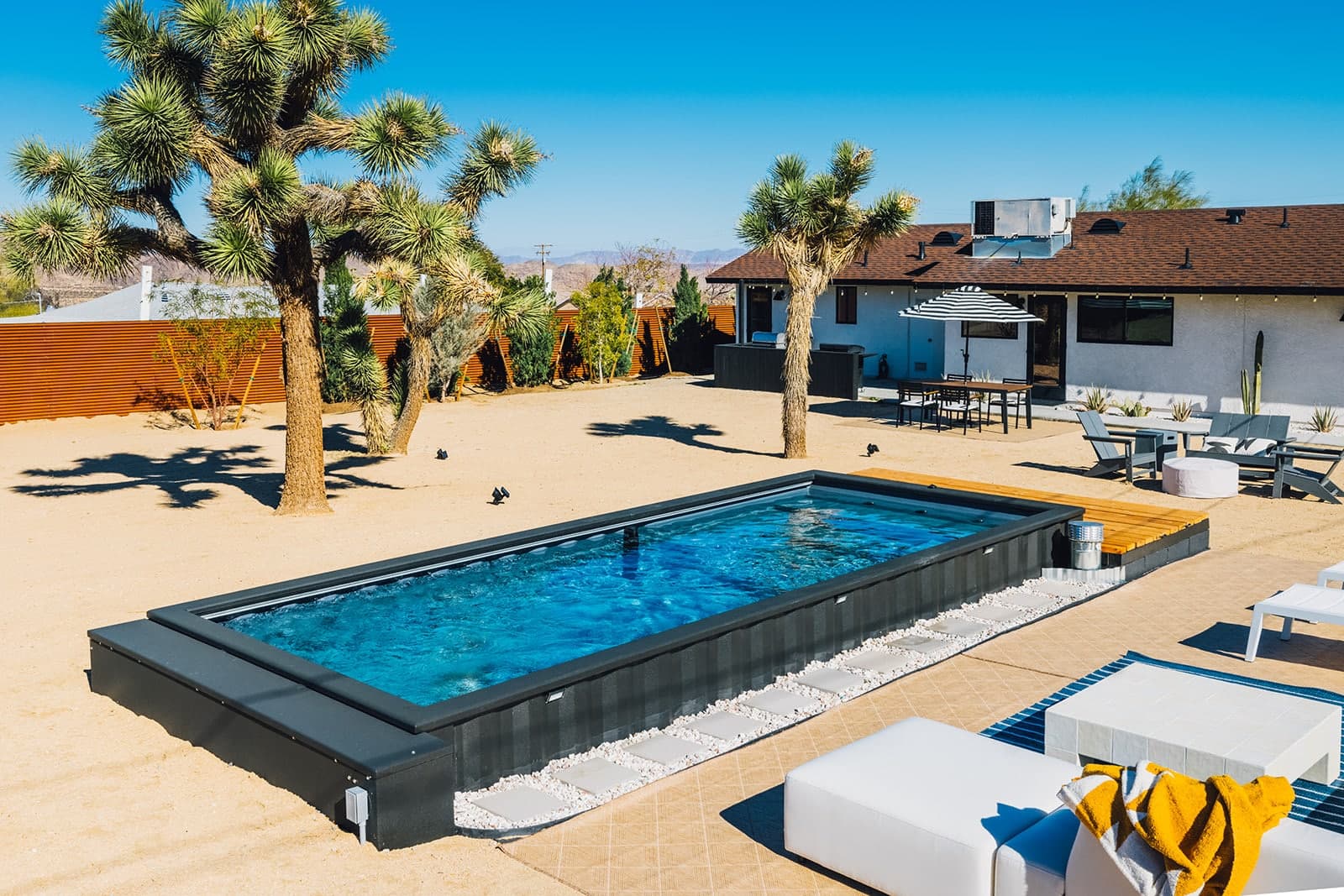
A container pool is exactly what it sounds like: a swimming pool constructed from a repurposed steel shipping container. These containers (usually 8 feet wide and 20–40 feet long) are made of rugged weathering (“Corten”) steel designed to withstand harsh conditions. When converted into pools, they form an industrial-strength, long-lasting pool. Shipping containers were originally built for ocean voyages and heavy stacking, so their high-strength steel naturally resists cracks and structural damage. Modern container pools add smooth liners and coatings to ensure watertight performance and comfort. In short, a container pool is a durable, portable, prefab pool that offers a sleek, modern alternative to traditional inground pools.
Beyond being a clever reuse of materials, container pools are fast to install and cost-effective. Since the pool body is essentially prefabricated, homeowners often save months of construction time. The shell can be delivered and placed with a crane in days, rather than waiting 8–12 weeks for a concrete pool build. They also tend to cost far less than custom concrete pools. For example, experts note that container pools typically run half the price of a comparably sized inground pool. And because the container’s volume is smaller than a large gunite pool, it uses less water and heating energy. In summary, container pools combine strength, sustainability, and modern design in one package – a big reason they are growing in popularity.
The Rise of Shipping Container Pools in 2026
In recent years, shipping container pools have surged in popularity as homeowners and businesses seek unique, eco-friendly outdoor features. The global swimming pool market is booming (projected at $3.8 billion by 2030), and alternative pool concepts are a big part of that growth. Container pools tick many boxes for today’s buyers: they are sustainable (recycling used containers), affordable, and trendy. Millennials and Gen Z buyers, in particular, value their combination of innovation and green credentials.
Designers and media outlets have featured container pools as a chic new trend, fueling demand. One industry observer calls them “one of the coolest backyard trends of 2026,” noting their fast setup and durability. Even vacation rentals and luxury resorts are installing container pools to create eye-catching, Instagram-worthy amenities. In short, the shipping-container pool concept has moved from niche to mainstream. As Midwest Container Pools highlights, such pools offer “a modern, durable, and often faster alternative to traditional” pools.
How a Container Pool Is Built (Step-by-Step Breakdown)
Building a container pool involves transforming a standard cargo container into a leakproof, pool-ready shell. Manufacturers generally follow these steps:
Select and Inspect the Container
Builders start with a high-quality steel shipping container (often a nearly new “one-trip” container). Each container is thoroughly inspected: walls, floor and roof sections must be structurally sound and free of severe corrosion or damage. Using a durable container ensures a strong foundation.
Modify the Structure
The next step is cutting and welding. Typically, the container’s roof is removed (or cut to create the pool opening) and any reinforced edges are welded to maintain strength. Critical areas like the long sidewalls and floor are reinforced (with steel bracing or frame welding) so they can hold the water’s weight without bowing or leaking. These reinforcements prevent future cracks or leaks when the pool is filled.
Apply Waterproof Lining or Shell
After the structure is solid, the interior is finished to hold water. Many builders install a
fiberglass pool shell that fits snugly inside the container. This preformed fiberglass liner is seamless and highly durable: it makes the interior smooth, non-porous, and corrosion-resistant. Alternatively, some pool makers use a welded vinyl liner or a special pool membrane (discussed later). In any case, a watertight barrier is crucial. Midwest Container Pools, for instance, installs a premium fiberglass shell to eliminate leaks and simplify maintenance.
Add Insulation
To regulate temperature and stiffen the structure, closed-cell
spray foam insulation is sprayed onto the exterior of the container shell. This foam (often 2–3 inches thick or more) creates a high R-value (around R‑6 per inch) that keeps the pool water warm longer and reduces heating costs. It also fills every nook and cranny, preventing any air gaps. As a bonus, the hardened foam adds rigidity to the walls and acts as a moisture barrier.
Install Plumbing and Equipment
Next come the pool systems. The team cuts holes for skimmers, returns, and main drains and runs plumbing lines. They install a pump and filter system (often choosing high-quality brands like Hayward or Pentair) and necessary valves. Electrical lines are run for lights and any heater controls. Midwest’s pools, for example, come with a Hayward cartridge filter and pump, plus a Pentair LED underwater light as standard equipment. All pipes and wiring are tied into the structure while it is still accessible.
Apply Exterior Finishes
Once the systems are in place, attention turns to the outside. The bare steel container can be painted, clad, or otherwise decorated. Many owners choose to smooth or stucco the exterior, or cover it with wood or composite panels, to match their landscape. Midwest Container Pools notes they offer
“fully customizable” exterior finishes, from raw steel looks to painted colors. This step makes the pool look like a planned part of the yard.
Preparation for Delivery
Finally, the completed pool unit is made ready to ship. The pool is securely wrapped and braced on a flatbed truck or trailer. The shipping company typically uses a flatbed or fork-lift method to position it. For example, Midwest parks the pool on a flatbed and delivers it as a single unit to the customer site. The container pool arrives
factory-built and pretested, so onsite work is minimal.
Installation at the Site
At the home, a crane or specialized trailer places the pool onto the prepared foundation (see Installation section below). The plumbers and electricians hook up the systems to the home’s utilities. All that remains is to fill the pool with water, test the equipment, and tune the chemistry. According to Midwest, this on-site installation can often be done in a matter of days once the foundation is ready.
Each of these steps is critical to ensure the container pool is safe, watertight, and long-lasting. By combining modern pool components (like fiberglass shells and quality pumps) with the strong container shell, manufacturers create a turnkey pool ready for enjoyment.
Key Materials in Container Pools
Container pools rely on several core materials. Understanding these helps explain their performance and durability:
Steel Shell
At the heart of every container pool is the steel shell – the original shipping container walls and floor. These are typically made of high-strength Corten steel, an alloy developed for weather resistance. Corten (weathering) steel naturally forms a protective oxide layer in air, making it much more durable than ordinary steel. In practice, this means a container wall can last for decades without significant rust. Shipping containers generally use steel about 1.5–2 mm thick, which is far heavier-duty than most above-ground pool walls.
Because container shells were built to stack many tons of cargo, the walls and floor are extremely strong. In fact, one advantage cited is that container pools have “industrial-grade steel” and can resist cracking better than traditional concrete pools. However, it’s important to note that once a container is cut and altered, the exposed edges need extra protection. Builders usually grind and coat any weld seams, corners, and cut edges to prevent corrosion.
To summarize: the steel shell provides the skeleton and strength of the pool. Its robustness is one reason container pools can tolerate freezing climates or heavy use without cracking. This sturdy foundation is a major selling point – as Midwest notes, “shipping containers are built from high-strength Corten steel, designed to endure years of abuse”.
Waterproofing & Rust Protection
Raw steel, even Corten, will eventually corrode when in constant contact with water and pool chemicals. So container pools always include a waterproof liner or coating to protect the steel shell. This is a critical step: without it, the pool would rust out.
There are a few approaches:
Fiberglass or composite liner:
Many container pools (including Midwest’s) use a one-piece fiberglass shell glued or mechanically anchored inside the container. The fiberglass itself is fully watertight, so the steel never touches water. It also prevents rust and requires no painting. Fiberglass liners effectively
eliminate leaks and rust issues. The downside is that the container can no longer flex, so proper reinforcement is still needed.
Pool membrane or vinyl liner:
Some builders spray or weld a durable polymer coating or use a welded vinyl liner. For example, Ecopool uses a Zycore architectural membrane (a German-engineered vinyl) as the interior finish. These linings create a smooth, algae-resistant surface and completely cover the steel walls. They act like a waterproof membrane (similar to a vinyl liner in an inground pool). Membranes are very effective at rust protection, and minor damage can be patched. For container pools, a high-quality membrane is often considered the
“ultimate solution” by industry experts.
Epoxy or marine paint:
A cheaper option is to simply epoxy-coat the steel walls. Many do a full spray of marine-grade epoxy or a product like Zinc-based paint. This forms a protective layer on the steel. While less expensive upfront, painted interiors have drawbacks: experts warn that even good coatings can fail over time, leading to rust spots. In fact, a PoolNerd guide cautions that a painted-steel interior may begin rusting in 18–24 months, and the finish can become rough.
In practice, proper corrosion protection is non-negotiable. The best builders will combine a waterproof liner with thorough surface prep. For example, Midwest’s use of a one-piece fiberglass shell fully seals the steel against water. HomeGuide notes that most container pools are lined (with vinyl, fiberglass, or plaster) and “coated with a waterproofing or zinc paint to prevent rust”. The key takeaway is that a container pool must be fully protected from water-to-steel contact.
Fiberglass Liner vs. Membrane vs. Painted Interior
Because the interior finish is so important, it’s worth comparing the main options:
Painted Steel:
This is essentially an epoxy or marine paint coating on the container walls. It’s the least expensive route but also the least reliable. A container pool with only paint inside will feel more like raw metal, and any nick or aging can cause rust. PoolNerd explicitly advises against painted-only interiors: even a high-quality epoxy can flake under movement, and children can scrape off paint on their skin.
Fiberglass Shell:
This is a prefabricated pool liner molded to fit. It is welded or fastened inside the container after reinforcing the steel. Pros: fiberglass is non-porous and resists algae, oils, and chemicals. It will never rust, and it feels smooth. Midwest notes fiberglass
“eliminates concerns about leaks and rust”. It’s also very durable against impacts and chemicals. The downside:
fiberglass shells are rigid, so the container must be perfectly measured and fitted. If the container settles or shifts, a fiberglass shell can crack (though cracks are rare if properly installed). It is also heavier to ship and install.
Architectural Membrane (Vinyl Liner):
Systems like Ecopool’s Zycore or standard custom vinyl liners are flexible sheets welded or glued in place. These membranes are highly durable and fully cover the steel. They offer a smooth surface and allow more design flexibility (windows, curves). Zycore in particular is a closed-cell vinyl that resists tearing and algae growth. It can be repaired if punctured, and it has a longer lifespan than typical pool vinyl. The main drawback is initial cost (membranes can be pricey) and the need for a perimeter or bead to hold it. Many consider a high-end membrane the
“best liner” option for maximum longevity.
In practice, Midwest Container Pools uses a fiberglass shell by default, whereas companies like Ecopool use membrane liners. Both approaches create a top-tier pool interior. Whatever liner is chosen, it should be smooth, watertight, and resistant to pool chemicals. Midwest’s experience shows that a fiberglass interior is “resistant to cracks, algae, and damage from pool chemicals”, making it ideal for longevity.
Spray Foam Insulation
A key innovation in modern container pools is adding spray foam insulation. Closed-cell polyurethane foam is sprayed onto the exterior surfaces of the pool shell (and sometimes inside wall cavities). This serves multiple roles:
- Thermal Barrier: Closed-cell spray foam has one of the highest R-values per inch (around R-6). A 2–3″ layer of foam on all sides drastically reduces heat loss. Midwest reports that properly insulated container pools lose only about 0.4–0.6°F of heat overnight, compared to ~2°F for uninsulated concrete. This means the water stays warm much longer, reducing heater run-time. For example, if you heat a container pool to 80°F at night, it might still be 75–79°F the next day – a big energy savings. The foam also keeps heat out in hot weather, helping the water stay cooler in summer.
- Structural Strength: Once cured, closed-cell foam becomes a rigid composite attached to the container. Midwest notes that the foam actually
“reinforces the container walls”, adding strength to the pool shell. The container and foam work together to resist deformation under water pressure. In fact, many container pool companies market insulated pools as superior because the foam helps “stiffen” the structure.
- Moisture and Corrosion Barrier: Closed-cell spray foam is hydrophobic. It prevents moisture penetration. By sealing the steel behind it, the foam adds another layer of rust protection. Condensation on pool surfaces is dramatically reduced, which also helps guard the metal.
- Noise Reduction & Comfort: The foam layer absorbs sound, muting exterior noise. It also provides some impact cushioning.
In short, spray foam is often considered essential for insulated container pools. It dramatically improves energy efficiency, comfort, and durability. An installation guide notes that a thick foam layer “totally covers the corrugated shipping container walls without leaving any gaps”, creating a continuous thermal envelope. This synergy of steel shell + insulation is what makes a container pool perform more like a high-end spa than an uninsulated stock tank.
Popular Features & Custom Options
One of the strengths of container pools is that they can be highly customized. Despite the fixed length and width, builders and owners get creative with features. Common options include:
Built-in Steps and Ledges
Nearly all container pools include steps or benches molded into the interior. Midwest’s standard
20ft model has built-in steps at one end, while their 40ft has a 5-ft tanning ledge and both end and side benches. These built-in features are far sturdier than adding a bolt-on ladder later. They also maximize usable swim space.
Underwater Seating & Lounging Areas
Besides steps, many owners add submerged benches, spa shelves, or “U-seat” lounges. For example, Ecopool offers an L-shaped bench or a sun shelf in some designs. These allow swimmers to partially recline or children to play in shallow area. All-inclusive benches are popular for socializing in the water.
Acrylic Windows
One dramatic upgrade is a clear acrylic wall section. A side or end window can be installed into the container wall, creating an aquarium-like view. This feature comes at extra cost (often several thousand dollars), but it creates an unforgettable look. PoolNerd shows containers with 4-ft high side windows that allow light in and swimmers to see out.
Water Features
Fountains, spillways, and jets can be integrated. For example, swim jet systems turn the pool into a portable swim spa. Or a fountain along one wall adds visual interest. Many container pool sellers offer spa/hot tub models: essentially a container with two zones – a cooler swim area and a heated spa area, each with independent controls.
Lighting
LED lights are standard in modern container pools. Underwater color lights (like Pentair LED) create ambience. Also popular are fiber-optic or LED strip lights under steps or benches. Lighting is not only functional but a big style element. Midwest’s packages include an LED light with every pool.
Heaters and Automation
Since container pools are often insulated, you can add a heater (gas, electric heat pump, or solar) to extend your season. Common options include heat pumps (Arctic heat pump) and propane/natural gas heaters. Automated controls (Wi-Fi timers, smart chlorinators, ozonators, or UV sterilizers) are popular for ease of maintenance.
Covers
Safety and heat retention covers (manual or electric) are wise add-ons. A rigid safety cover can prevent debris and evaporation overnight. Electric retractable covers offer convenience and energy savings but come at a higher price.
Exterior Finishes and Landscaping
Though not a “feature” of the pool itself, customizing the look of the outer container is important. Owners might clad the outside in wood decking, tile, or synthetic panels. Others simply paint the container a custom color. Composite decking can be built directly on top of the container rim for a larger deck area. Landscaping around the pool – planters, pavers, glass fences – completes the design. Midwest notes that exterior cladding and deck colors are fully customizable.
Modular and Multi-Unit Designs
Some manufacturers let you combine multiple containers. You could have an L-shaped pool by joining two units, or a U-shape with three. Ecopool’s factory can weld multiple sections together for longer pools or unique shapes (limited only by imagination). This is a more advanced custom job, but it shows the flexibility of modular pool design.
In short, while container pools have standard dimensions, they come with many optional features. From tanning ledges to windows, LED lighting to swim jets, owners can create a tailored swim experience. As one overview notes, container pools can be outfitted with “features like jets, lighting, and heating” just like any high-end pool. When planning a container pool, make a wishlist of must-haves (steps, cover, etc.) and nice-to-haves (window, built-in spa) and consult the builder on options and costs.
Installation Methods (Above-Ground, Partially In-Ground, Fully In-Ground)
Container pools can be installed in several ways, giving homeowners flexibility based on space, budget, and aesthetics:
Above-Ground Installation:
This is the simplest and fastest method. The pool sits entirely above grade on a level, load-bearing pad (gravel or concrete). A truck or crane lifts the completed pool onto the pad. No excavation is needed, so installation can take as little as one day. Above-ground setups are often the cheapest and involve minimal site disruption. They are also portable – you could even move the pool later (or to a new home) if needed. The main downside is that the pool’s walls will protrude above ground, so some people choose to surround it with decking or landscaping for a finished look.
Partially In-Ground (“Semi-Inground”):
This is very popular in neighborhood settings and HOA communities. The pool is set into a shallow excavation – typically only a few feet deep – so that part of the container’s height is below ground and part above. The result looks more integrated into the yard than fully above-ground, without the full cost of deep digging. For example, you might dig 2–4 feet down, so the pool stands 4–6 feet tall from ground level (instead of 8 feet). Semi-inground pools may require a retaining wall or reinforced footing around the exposed portion. Many owners like this compromise because it hides the bulk of the pool and can help maintain yard sightlines.
Fully In-Ground Installation:
The entire container is set into a deep pit. This gives the look of a regular in-ground pool (the coping or deck sits flush), with none of the container visible above grade. The container must be fully supported: typically the pit has a custom concrete floor and short perimeter walls (or piers) to cradle the container. Installing fully in-ground requires heavy equipment and is more expensive (excavation, bracing, etc.), but it can be worthwhile if you want a permanent look. Importantly, even a fully in-ground container pool can cost much less than a concrete pool because it skips the costly forming and concrete walls of a traditional gunite pool.
In practice, foundation prep is key for any type. HomeGuide emphasizes that an above-ground container pool needs “a solid, level surface, typically compacted gravel, a concrete slab, or concrete footings.” Midwest recommends at least a 3–4″ concrete pad or footings under the pool. This prevents settlement and provides a firm, even base. If going inground, you must follow local engineering guidelines (soil bearing, backfill, etc.). Always check codes: some areas treat container pools as “modular” structures, potentially with different permit requirements.
Placement is flexible: container pools can fit in oddly-shaped or sloped yards where traditional pools are impractical. For a sloped lot, for instance, you might partially embed the uphill side and have a deck or retaining wall on the downhill side. Many marketing materials highlight that container pools can be “above ground, semi-buried, or fully inground” with the same unit.
In summary, plan your installation method early. An above-ground install is quickest and least expensive, while semi- or fully-in-ground offers a more seamless look (at higher cost). Whatever method you choose, ensure the base is engineered properly and that you have the right crew (crane operators, backhoe, etc.) lined up. Proper installation is essential for long-term performance.
Maintenance & Longevity: How Long Do Container Pools Last?
With proper care, a container pool can last decades. Actual lifespan depends on materials, environmental conditions, and maintenance:
Steel Shell Longevity:
The container’s steel core can last
30+ years if well-protected. HomeGuide estimates
10–30 years for a container pool’s lifetime, noting that older used containers (especially those that saw ocean use) may be on the low end, while new or “one-trip” containers can go longer. The crucial factor is preventing corrosion: a well-coated or lined steel shell will not rust, whereas one without protection could start showing corrosion in a couple of years.
Fiberglass and Liners:
A high-quality fiberglass shell itself is extremely durable. Manufacturers like Midwest report that fiberglass-lined pools
“resist cracks, algae growth, and damage from pool chemicals”, meaning they often outlast vinyl or concrete finishes. Fiberglass typically requires no resurfacing. Vinyl or membrane liners may eventually need patching or replacement after 15–25 years, depending on quality and exposure. Routine inspection for tears or loss of seal is advised.
Equipment and Systems:
The pump, filter, and lights have normal pool-equipment lifespans. Expect to replace cartridges, seals, and possibly the pump after ~5–10 years. LED lights can last 10+ years. Stairs or other added features (ladders, jets) should be checked for wear.
Water and Chemicals:
Like any pool, container pools need regular chemistry balancing (pH, sanitizer, etc.). Because container pools typically hold less water than larger pools, they actually use
fewer chemicals per volume. Also, a smooth liner (fiberglass or membrane) resists algae better than plaster, so cleanings are often easier. Midwest notes that their fiberglass interior is “low-maintenance” and helps prevent algae growth. Weekly or bi-weekly cleaning (skimming and vacuuming) is usually enough, plus monthly filter checks. HomeGuide estimates professional maintenance at $80–$150/month if outsourced.
Insulation Benefit:
The spray foam means the pool is less prone to freezing issues than an uninsulated steel pool. However, in climates with hard freezes, you would still likely winterize by either running a heater/water flow or draining to below the skimmer level. But the steel shell and foam will generally protect against small amounts of freeze.
General Upkeep:
Keep the container exterior painted or finished to prevent rust. Ensure all welds and seams remain sealed (leaks here will show as damp spots). Replace pump seals as needed, and address any coating damage promptly. Container pools don’t require annual resurfacing like concrete pools, which is a maintenance advantage.
Overall, owners should plan on a multi-decade lifespan, assuming normal care. Many customers of container pools find that the hardest part is preparing and installing – once it’s set up, a container pool behaves much like any fiberglass or vinyl pool. It will not require the frequent resurface or liner changes that some other pools do. As one reviewer notes, a fiberglass-lined container pool “doesn’t require resurfacing or liner replacements”, so maintenance can be relatively low.
Container Pools vs. Traditional Pools: Which Is Better?
Container pools are often compared to standard pools. The “better” choice depends on your goals:
Cost:
Container pools typically cost $35,000–$65,000 installed for an 8×20 ft model. This is generally
less than a custom inground concrete pool (often $50k–$100k+), especially when you include landscaping and extras. A basic above-ground pool is much cheaper ($1.5k–$5k) but not comparable in size or durability. In other words, a container pool is mid-range: far above a simple stock pool but below a high-end concrete job. One analysis notes container pools have
“no surprises” in install cost and include many premium features for the price. Because there are fewer site-works (no gunite forming, less excavation), labor costs are lower. Midwest points out that a container pool can cost
“nearly half” of a custom concrete build while delivering similar functionality.
Installation Time:
Container pools win hands-down here. They are
pre-built in a factory. Once your site is ready (pad poured or excavation done), the pool is delivered and filled in a matter of days. In contrast, a concrete (gunite) pool takes weeks to months (excavation, rebar, concrete, curing, etc.). Many buyers choose containers simply to avoid long construction disruptions.
Durability & Maintenance:
Container pools are built from steel and high-quality liners, making them very durable. As noted, they can last 20–30 years or more with proper protection. Concrete pools are durable too, but they often crack (especially in freeze/thaw climates) and require resurface every 10–15 years. Vinyl liners in traditional pools might need replacement around 8–12 years. Fiberglass inground pools (traditional molded shells) are smooth and crack-resistant, but can warp if not set properly. Container pools with fiberglass interior combine strength of steel with the low-maintenance surface of fiberglass, a tough combination.
Energy Efficiency:
Thanks to spray foam, insulated container pools hold heat much longer than uninsulated pools. This means lower heating bills. A typical gunite pool loses heat quickly to the ground; a container pool’s warm water stays warm. This efficiency is especially important in cold climates (Midwest emphasizes that insulation keeps their pools ~70–80°F vs mid-50s outside). On hot days, the foam also slows warming, which can save on cooling (solar cover or shade can be used, since containers often have smaller water volume).
Space & Size:
Containers are rectangular (usually 8–12 ft wide, 20–40 ft long). This limits creative shapes. You get a neat lap pool shape but not freeform curves or unusual layouts. Traditional pools can be any shape and width. If you dream of a kidney-shaped luxury pool with a diving well, container pools aren’t suited for that. On the other hand, if you need a straight-edge lap or plunge pool or have a narrow yard, containers can fit well where some curved pool wouldn’t.
Portability:
Only container pools are portable. If you move houses, you
can take a container pool with you (or sell it and reuse it). Concrete and vinyl pools are fixed. This portability factor is often cited as an advantage. Even within a property, a container pool can be picked up and repositioned (though this is an expensive move).
Aesthetics:
Container pools have a distinct
modern-industrial look. They can look very sleek, but are inherently linear and rectangular. Some people love this contemporary style; others prefer organic shapes of concrete. Container pools often have simpler edges and a uniform blue or white interior. They usually require adding decking or coping to soften the look. But they do make a bold design statement.
Resale Value:
Experts say adding a container pool can boost property value by making the home stand out. While a pool alone in some areas may have mixed impact, a unique, high-quality installation (especially with energy efficiency and low maintenance) can be a selling point.
In summary, container pools are not “better” in all cases, but they have clear advantages. They tend to be cheaper, faster, and more durable than high-end traditional pools, and they suit modern, efficient lifestyles. Their portability and eco-friendly reuse angle add value. However, they lack some of the design freedom of a fully custom gunite pool, and they may be limited in width (8–12 ft) compared to what a concrete pool can offer. For many buyers, though, the trade-offs are worth it. As one comparison concludes, container pools offer premium features at a fraction of the cost and with fewer surprises. For a full comparison of every factor from installation to aesthetics, check out our guide on shipping container pools vs. traditional inground pools.
Pros and Cons of a Container Pool
Pros:
- Lower Cost: Generally less expensive than a concrete pool of similar size.
- Fast Installation: Can be installed in days rather than months.
- Durable Construction: Industrial steel walls (often further reinforced) make them very strong.
- Prefabrication: Built offsite, reducing yard disruption during install.
- Portable: Can be moved (even to a new home) if needed.
- Energy Efficient: Insulated shell retains heat much better than uninsulated pools.
- Eco-Friendly: Reuses shipping containers and typically uses less water.
- Customization: Many options (windows, lighting, tanning ledges) allow personalization.
- Low Maintenance: Smooth fiberglass or vinyl interior resists algae and doesn’t need resurfacing.
Cons:
- Limited Shape/Size: Standard widths and right-angle shape (usually 8–12 ft wide) – not ideal for freeform designs or wide pools.
- No Diving Board: Typically too shallow and short for diving or very tall slides (and safety regulations often forbid them on narrow pools).
- Potential Rust: The steel can rust if waterproofing fails; ongoing maintenance of coatings is required.
- Insulation Needed: Unlike a concrete pool, a container is not naturally insulated; without spray foam, heating costs can be high.
- Heating/Cooling Costs: If uninsulated or if you want very warm water, energy use can add up.
- Equipment Limitations: Saltwater systems are less common (not all vinyl liners are salt-friendly).
- Visibility: The container walls can dominate the yard unless screened or fully embedded.
Every home and budget is different. These pros and cons should be weighed in context. Many container pool owners feel the advantages far outweigh the drawbacks, especially for small yards or where quick installation is a priority.
Is a Container Pool Worth It?
For the right homeowner, a container pool can be an excellent investment. Consider these factors:
Budget & ROI:
If your budget is under $100k for a pool, a container pool gives you premium amenities (LED lights, sturdy steps, etc.) at roughly half the cost of a custom concrete pool. Importantly, one analysis found that the lower installation cost often leads to a higher return on investment when selling the home. A container pool can
boost property appeal by offering a unique, modern feature.
Speed of Enjoyment:
Do you want water
now? A container pool can be delivered and filled in as little as a week. Traditional pools keep your yard dug up for months and delay enjoyment. Many owners feel getting the pool quickly is
worth it.
Maintenance and Efficiency:
Container pools can be lower maintenance (no resurfacing, non-porous liner) and more energy-efficient (insulation) than traditional pools. Over time, these savings partially offset the upfront cost. If you value efficiency and low hassle, that tilts the scale.
Modern Aesthetic:
If you love contemporary design, a container pool can be a showpiece. It adds “cool factor” in the backyard. However, if you dream of a natural lagoon or a classic Roman pool, a container might not suit your vision.
Location & Space:
Container pools shine in tight spaces. For urban or small suburban lots, a container pool can fit where a freeform pool cannot. They also work well on uneven lots (as they are self-contained modules). In contrast, if you have an expansive yard and want a sprawling pool, other types may be better.
Long-Term Plans:
Since container pools are somewhat modular, they can adapt with you. If you might move, remember you could potentially take it or sell it separately. That flexibility might make it more “worth it” to some.
In short, a container pool is worth it if you want a balance of cost, speed, and modern convenience. They are not a fad – many experts argue that for many homes, the lower price and efficiency makes container pools “a practical, affordable, and durable alternative”. As one summary states: you get “the luxury of a pool without the overwhelming costs”.
That said, if you need very large size, a diving board, or a highly customizable shape, a traditional pool might suit you better. Always consider your specific needs: talk to reputable builders, get quotes, and compare to conventional pool prices. If fast installation, reduced upkeep, and a unique look appeal to you, then yes, a container pool can definitely be worth the investment.
Midwest Container Pools: Setting the Standard
Midwest Container Pools is an example of a company specializing in these pools, and their product details illustrate a top-tier build. Some highlights:
- Fiberglass Interior: Midwest uses a
fiberglass liner for the pool interior (as opposed to a painted steel wall or vinyl liner). This delivers a smooth, durable surface that
“resists cracks, algae growth, and damage from pool chemicals”. A fiberglass interior means no rust concerns and easy cleaning.
- Spray Foam Insulation: Every Midwest pool is fully insulated with closed-cell spray foam. Their process traps heat and adds structural strength. In practice, this makes a big difference in cold climates (keeping the water warm) and in general energy savings.
- Steel Reinforcement: Even though container shells are strong, Midwest adds extra steel bracing at key points (walls, corners, floor) during fabrication. This reinforcement prevents bowing or leaks, ensuring the shell holds water safely for decades.
- Included Equipment: A Midwest package includes premium pool equipment. Every model comes with a
Hayward cartridge filter and pump, multiple skimmers and returns, and a Pentair LED underwater light. These are top-brand components often sold as add-ons elsewhere. Bundling them means the pool is truly plug-and-play.
- Models & Pricing: They offer two main sizes:
- A 20-foot model (8×20) starts at
$42,960. This includes the fiberglass liner, built-in steps, the filter/pump system, lights, and standard decking.
- A 40-foot model (8×40) starts at
$57,390. It comes with a 5’ tanning ledge, steps, a U-shaped bench, and similar equipment.
These prices (as of 2026) are for standard finishes and exclude optional add-ons. - Features Included: Midwest’s standard pools already include popular amenities: built-in stairs and tanning ledge, interior one-tone blue finish, composite decking on surfaces, etc. They package the basics so buyers don’t have to add every upgrade. (Optional extras like glass windows, heat pumps, covers, and salt systems are also available for additional cost.)
- Custom Exterior: While the inside finish is set (blue fiberglass by default), the exterior of the container can be customized. Midwest works with customers to choose a cladding or paint. They note
“exterior finishes [are] fully customizable”, so the pool can match your style.
- Site Prep Requirements: Important note: container pools need a proper foundation. Midwest’s instructions specify a 3–4″ concrete pad or concrete footings (or a well-compacted gravel base) beneath the entire pool. The homeowner is responsible for having this ready. This ensures the container sits level and supported.
- Delivery: Midwest arranges fast local/regional shipping. They use multiple local carriers and coordinate each delivery. Notably, Midwest says they “never add extra markups” on transport – they charge actual freight cost. This helps keep total price competitive. The modular pools are shipped on flatbeds, so any site accessible by truck or crane can receive them.
By focusing on quality materials (fiberglass, foam, steel) and including high-end equipment, Midwest Container Pools aims to provide a “pool that lasts”. Their build process (described above in our How It's Built section) shows attention to each detail. While there are now many container pool brands, Midwest’s example illustrates the best-in-class approach: professional design support, high-grade materials, and transparent pricing.
If you value a warranty-backed product with these exact specs, Midwest’s offerings set a high standard. But remember, many of their features (fiberglass liner, Hayward pump, foam insulation) are also available from other quality builders. Use these details as a benchmark when you shop around.
Final Thoughts & Buyer Tips
Container pools offer a modern, efficient way to add a pool to a property – but they’re still a significant investment. Here are some final tips for prospective buyers:
- Research and Compare: Get quotes from multiple container pool dealers and installers. HomeGuide advises
“compare at least three quotes” from experienced providers, and be wary of anything that seems too cheap. Check reviews and portfolios. Look for companies (and local installers) with pool industry experience and positive customer feedback.
- Ask the Right Questions: Ensure you understand what’s included. For example, Midwest includes the pump, filter, lights and fiberglass liner. Ask any seller:
“What brand of pump? Are lights included? What interior finish do you use?”. HomeGuide’s contractor question list is a good guide (licensing, contract, warranty). Make sure the quote covers
complete Container pool installation (foundation, plumbing, electrical) or know what’s extra.
- Permits and Regulations: Always check local codes early. Container pools sometimes fall into a special category (modular/portable) but may still need a pool permit. The allowed installation method (above-ground vs in-ground) can be regulated. Don’t skip obtaining permits – it can save legal headaches later.
- Prepare the Site: Plan your site prep well in advance. You’ll need a level, compacted pad – often a concrete slab or prepared gravel base. If planning a semi or fully-in-ground install, hire a qualified excavator and follow engineering plans for footings or walls. Make sure the truck and crane can access your yard.
- Climate Considerations: If you live where freezing happens, insist on insulation (closed-cell foam) and cover the pool in winter. Some container-pool installers (like Midwest) offer optional heating systems. Remember that a small pool can lose heat quickly on a cold night if uninsulated, so a heated (or at least well-covered) pool is wise.
- Maintenance Plan: Understand the maintenance. Will you do it yourself or hire a service? Container pools aren’t maintenance-free – you will need to balance chemicals and clean the filter regularly like any pool. However, expect fewer chores than for concrete pools. If unsure, consider a professional tune-up or a maintenance service a few times a year.
- Think Long-Term: Consider whether you’ll stay in your house or move. A container pool can potentially be moved with the house, but more likely you’ll sell it. Factor that into your budget: an upgrade for your own enjoyment
and a future selling point. Citing that ROI argument again: the lower initial cost often gives a better return on investment.
- Safety: Don’t forget safety. Even small pools must follow safety rules. Plan to fence the area according to local pool safety laws. If not already included, add a lockable pool cover or an alarm for peace of mind.
- Financing: If the upfront cost is a concern, see if the pool builder or local bank offers financing. Some container pool companies partner with lenders who specialize in pools or home improvements.
- Warranty and Aftercare: Look for warranties on the structure and equipment. Ask if the pool builder offers any guarantee of no leaks or corrosion. Also ask about service options: can they help with winterization, repairs, or part replacements down the road?
A container pool is a serious project, but many homeowners find the rewards well worth the planning. The combination of sturdy steel construction, modern equipment, and smart insulation means you can enjoy a comfortable, attractive pool for years to come. By doing your homework, choosing a reputable builder (like the ones cited above), and preparing your site properly, you’ll maximize your chances of a trouble-free pool installation.
FAQ
What is a container pool?
A container pool is a swimming pool made by converting a steel shipping container. The steel container (usually 20 or 40 feet long) is modified into a watertight pool structure. This involves reinforcing the container, adding a waterproof interior (like a fiberglass shell or vinyl membrane), and installing pool equipment. The result is a fully functional pool with industrial-chic style.
How long does a container pool last?
A well-built container pool can last 10–30 years or more. Longevity depends on the container’s condition and upkeep. New or lightly-used “one-trip” containers tend to last longer. The steel shell itself is durable, but the liner/coating protects it from rust. With proper maintenance, many owners enjoy their container pools for decades.
What are container pools made of?
The main structure is made of steel shipping container walls and floor (usually Corten weathering steel). Inside, the container is lined with a waterproof material – commonly a prefabricated fiberglass pool shell, or alternatively a vinyl/architectural membrane. The exterior is often coated in spray foam insulation. So in summary: a steel shell + waterproof liner + insulation + pool hardware.
Can container pools be heated?
Yes. Container pools can be fitted with standard pool heaters (gas, electric heat pump, or solar). Their small volume and insulation make them quite efficient to heat. For example, Midwest offers optional gas heaters and heat pumps for their pools. Just as with any pool, you connect a heater to the pump loop. The good insulation (closed-cell foam) helps maintain the water temperature longer, so heating costs are lower than in a non-insulated pool.
Are container pools eco-friendly?
They can be. By upcycling a shipping container, you reduce material waste compared to building a new concrete pool. Container pools usually hold less water and have smaller heat loss due to insulation, so they use fewer chemicals and energy over time. Of course, their eco-friendliness depends on the details (e.g. how the container was sourced, and what heating system is used), but in general they are considered a “sustainable alternative” to traditional pools.
What is the best liner for a shipping container pool?
Industry experts generally prefer either a high-quality fiberglass shell or an architectural pool membrane. Fiberglass liners (one-piece shells) are extremely durable and algae-resistant, so they often get top marks for longevity. Vinyl membranes like Ecopool’s Zycore are also excellent – they’re smooth, repairable, and have superior tear resistance. Painted steel or thin epoxy coatings are considered inferior because they can rust and peel.
Do container pools rust?
They can, but only if not properly protected. Untreated steel in constant water will rust. In a well-built container pool, the steel shell is covered by a waterproof liner or coating (and often by spray foam), so the steel never contacts the water. With those protections, rust should not be an issue. However, customers should inspect and maintain the sealant or coating periodically. HomeGuide notes that “most container pools are lined… and coated with a waterproofing or zinc paint to prevent rust”.
How is a container pool installed?
There are three main methods. For above-ground installation, the container pool is placed on a prepared pad (concrete or compacted gravel) and leveled – no digging required. A crane or trailer simply sets it in place. For semi-inground, part of the container is buried (by digging a few feet around it) so only the top shows. This usually needs a retaining wall. For fully inground, the container is lowered into a deep hole, with a concrete foundation or piers supporting it. In all cases, a solid foundation is key. Installation crews connect plumbing, electrical, and fill the pool with water. A well-prepared site and proper equipment (crane, excavator) make the process smooth.
What does a container pool cost?
Prices vary by size and features. The national average installed cost is about $35,000–$65,000. For example, HomeGuide reports most 8×20 pools end up around $50K installed. Midwest Container Pools lists its 20-ft model starting at $42,960 and its 40-ft at $57,390 (base price, with standard equipment). Custom options (heating, windows, special finishes) will add to the price. Costs also depend on your region and site conditions. As a benchmark, container pools are generally more expensive than a basic above-ground pool but cheaper than a large concrete inground pool.
Are container pools worth the investment?
Many homeowners say yes, especially if the advantages match their needs. A container pool delivers a ready-made pool faster and often more cheaply than a custom inground one. For smaller yards or if you need a pool quickly, the value is high. These pools also tend to be durable and energy-efficient, which means fewer costs over time. According to Midwest Container Pools, container pools offer “nearly half the cost of a traditional pool with the same functionality”. They are well-suited for people prioritizing affordability, installation speed, and modern design. If you want a traditional freeform shape or a very large pool, they might be less fitting. Ultimately, whether a container pool is worth it depends on your specific situation, but for many it has proven to be a smart, long-lasting choice