Shipping Container Pools with Built-In Hot Tubs: Complete Guide

sheldon trieb • December 22, 2025
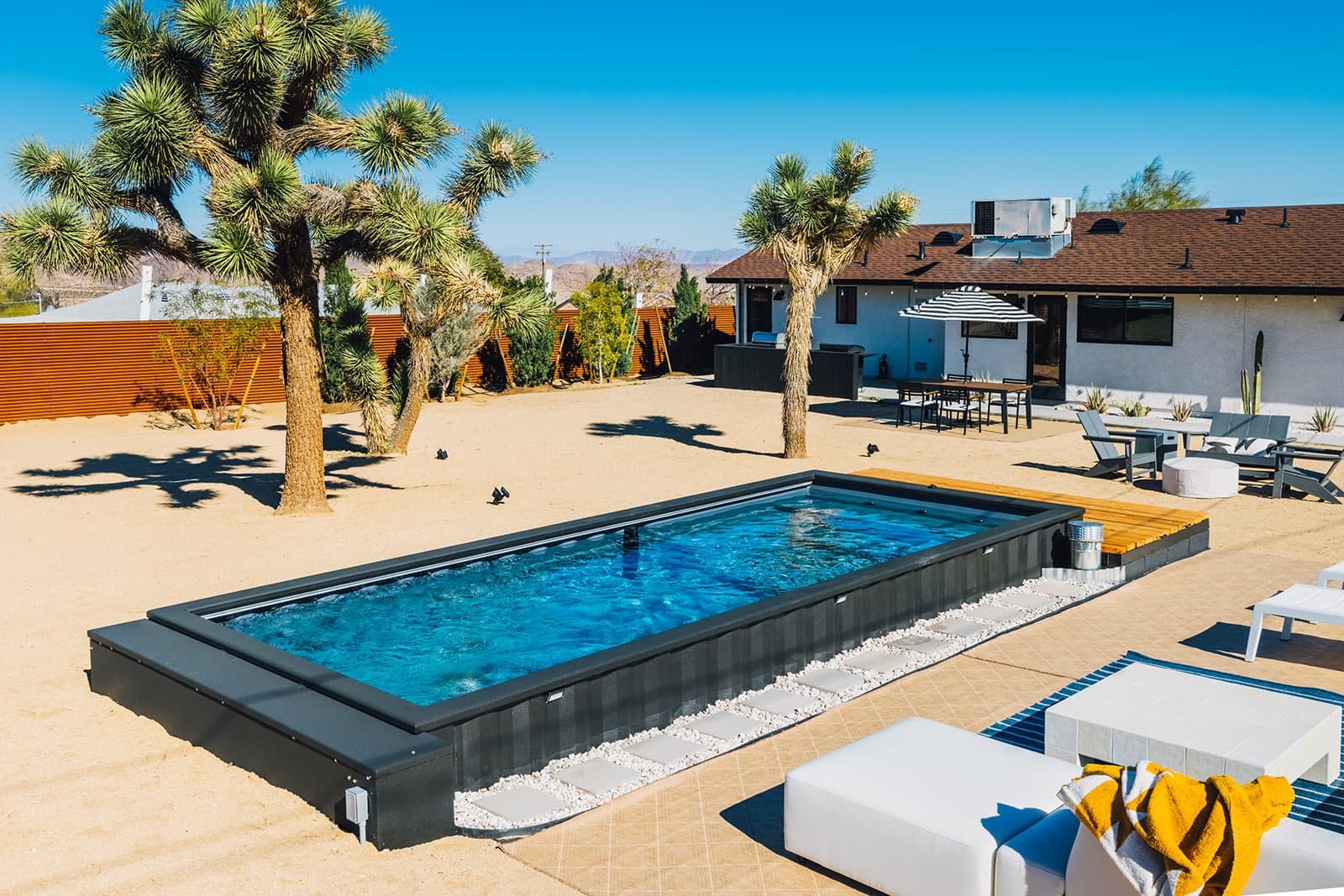
Shipping container pool with built-in hot tub, glowing green water, outdoor setting with fire feature and string lights.

Shipping container pools are innovative backyard pools built from repurposed steel shipping containers. Modern designs integrate a heated spa (hot tub) section alongside the swim area, offering both cool water for exercise and warm water for relaxation in one compact unit. These dual-zone pools arrive mostly pre-plumbed and wired, so they install quickly (often in days, not weeks) once your site is ready. With their fiberglass liners, spray-foam insulation, and Corten steel shell, container pools are durable and energy-efficient. In this 2025 guide we’ll explain what container pool–spa combos are, their benefits, how they work, planning and installation requirements, costs, customization, and who they suit. We’ll also address common FAQs about permits, lifespan, and whether they’re worth it.

What Is a Shipping Container Pool with a Hot Tub?

A shipping container pool with a built-in hot tub (sometimes called a dual-zone pool-spa combo) is exactly what it sounds like: a steel intermodal container converted into a swimming pool that also includes a separate spa compartment. Typically, one end of the container is fitted out as a small spa chamber with seating and massage jets, while the rest is a swim area. For example, Midwest Container Pools’ 20-foot model is described as “a luxurious swimming pool with a soothing spa, all within a sleek…20-foot container. In practice, the container is subdivided (often with a removable bulkhead) so you can enjoy both zones together or separately. Both zones share the container’s plumbing and structure, but have independent temperature controls – the spa side uses its own heater so it can stay toasty hot (hot tub temperature) while the main pool stays refreshingly cool. In short, a container pool–hot tub combo is a prefabricated, self‑contained backyard pool system: the structural strength of steel meets the comfort of a spa in one modular unit.

Key Benefits of Pool + Hot Tub Combos

Container pool–spa combos offer many advantages of both pools and hot tubs in one package. Key benefits include:

Versatility (Swim & Relax)

You get exercise and leisure in one. The spa’s jets provide hydrotherapy and warmth for relaxation, and the larger swim area lets you cool off or swim laps. This dual-zone design means one installation covers two uses.

Year-Round Enjoyment

The heated spa allows use even in cool weather. Many owners use the spa during winter and the pool in summer. The insulated container shell keeps water temperature steady (see below), so the spa can stay hot year-round with relatively low energy use.

Space Efficiency

Narrow 8-foot container widths fit in small backyards or side yards where traditional pools wouldn’t fit. For example, an 8×20 container pool needs only about a 10×22 foot level pad. The Pool Nerd notes you only need roughly a 10×25 ft area (including clearance) for an 8×20 pool. In compact urban or suburban lots, a container combo can provide a full pool and spa where a conventional pool is impossible.

Faster Installation

Unlike a concrete or vinyl pool (which can take months to build on-site), container pools arrive mostly finished. Once the foundation and utilities are ready, a container pool is simply craned in place, leveled, and hooked up. Many units are “plug-and-play,” meaning minimal construction time. You avoid lengthy excavation and curing delays.

Energy Efficiency & Durability

The steel/fiberglass construction (detailed below) and closed-cell foam insulation make container pools remarkably heat-retentive. Owners save on heating costs because the well-insulated shell limits heat loss. The Corten steel container structure is also very strong and weather-resistant, so the pool can last for decades with proper care.

Customization & Aesthetics

Container pools can be highly customized. As a package unit, you can easily add features like multicolor LED lighting, hydrotherapy jets, tanning ledges, or saltwater systems from the factory. Glass viewing windows can even be installed in the walls for an aquarium effect (typically +$3K–8K each). The exterior container can be painted or clad to match your décor. In short, you can personalize materials, colors, and features as you would a high-end spa/pool combination.

Cost Savings vs. Separate Pool+Spa

Because you’re buying one integrated unit, container combos often cost much less than installing both a pool and a separate hot tub. The combined system shares one pump/filter and one heater system (with branching valves for dual zones), reducing equipment and labor. Many buyers find the total price is lower than the sum of two standalone installations. (See container pool Cost Breakdown below.)

How It Works: Combo Container Pool Design

Shipping container pool-spa combos are dual-zone systems built inside one rigid steel shell. The engineering ensures each zone operates both independently and together. Key aspects of the design include:

Pool and Spa Chambers

The container is divided into two connected areas. The smaller spa chamber is often shallower and may include built-in bench seating, hydrotherapy jets, and a cover or spillway over into the main pool. The rest of the container is the swimming pool section for general bathing or exercise. For example, in Midwest’s 20′ combo, one end is a raised spa with massage jets while the other end is a deeper swim zone. Some models use a removable partition or overflow trough: water from the hot tub spills into the pool, creating a gentle waterfall between zones. (When desired, the divider can even be removed for one continuous pool.) Think of it like two interconnected bathtubs – one hot, one cool – contained within the container’s walls.

Filtration & Water Circulation

Both zones share a common circulation system. Suction lines draw water from the pool and the spa into a single pump/filter unit (usually housed at one end of the container). After filtration, return lines distribute clean water back to both areas. Valves control the flow split: you can bias circulation toward one side if needed. When the spa’s jets run, a dedicated spa pump pulls water from the spa and sends it through the high-pressure jets (returning it back to the spa in a closed loop). This way, the spa jets don’t overload the main filter. Meanwhile, the main pump continues circulating water in the pool portion at a normal rate. In short, the spa has its own jet pump and plumbing loop, but shares the filtration equipment.

Heating & Controls

Typically there is one heater sized for the whole system, or sometimes two (one for the spa, one for the pool). Spa heating is separate so the spa can reach 100–104°F even if the pool is kept around 80°F. Modern units use efficient electric heat pumps or gas heaters. Digital controls allow independent setpoints for the two zones. For example, Midwest’s combo advertises “dual temperature zones” so you can keep the spa toasty while the pool stays cool. Plumbing and electrical hookups are usually “pre-installed”: you just hook the container to your home’s power supply and water source.

In practice, all plumbing (pumps, filter, heater, jets, lights, drains) is either inside the container or immediately adjacent. Installation of the pool itself is mostly about preparation (crane placement) and then connecting the utilities. Once complete, the hot tub area can be used like any spa, and the pool like any small pool – yet each benefits from the integrated design.

Installation Requirements & Site Prep

Installing a container pool–spa combo requires careful planning of permits, site engineering, and groundwork. Treat it much like a standard pool project, with these steps:

Permits & Regulations

In virtually all U.S. jurisdictions, a shipping container pool is treated as a swimming pool under building codes. You will need a building permit (just as for an in-ground pool), and often separate electrical and plumbing permits. Your plans must show barrier compliance (fencing or covers) and safe placement. Local rules vary by state and city – check with your building department early. For example, many areas require 4′ fences or gate locks around pools, which applies to container pools too. If you’re in an HOA, get approval in advance (they may have specific aesthetics or height restrictions). Good suppliers often provide engineering drawings and compliance documents to streamline permitting.

Site Selection & Access

Choose a level, open area for placement. The site must accommodate the container’s footprint plus working clearance (typically 1–2′ extra on each side). Locate it away from utility lines – call your local utility company to flag underground cables or pipes before digging. Ensure overhead clearances and gate widths are sufficient (an 8’ wide container really needs roughly 8–9′ gate width). Plan where the container will be craned in: you need truck/crane access without trees, wires or tight turns in the way.

Foundation & Drainage

A stable, level base is critical. The most common foundation is a reinforced concrete slab at least 6″ thick (often 8–10″) with rebar, poured slightly larger than the pool. A slab ensures the 40,000+ lbs of water load (an 8×20 filled pool weighs over 40,000 lbs) is evenly spread. Alternatively, a properly compacted crushed-stone or gravel pad can work (it’s cheaper but must be extremely well compacted). Whatever you use, the base must stay level over time – poor leveling can twist the container. If burying the container partially, install perimeter drainage (French drains) to prevent groundwater buildup against the steel. In cold climates, consider insulation or deeper footings to resist frost heave.

Engineering Considerations

Cutting openings (for steps, windows, skimmers) and burying the container can reduce its inherent rigidity. In many areas a structural engineer review may be required for the foundation and container reinforcement. An engineer can specify extra welds or support beams if needed. Always confirm the container is certified and structurally sound (Corten steel is inherently strong, but modifications need reinforcement). Weights and loads should be calculated; remember that even an empty 20′ container weighs several tons.

Utility Connections

Plan for power and water hookups near the pool. Typically the container has a pre-installed electrical panel for the pump/heater/lighting. You’ll need a GFCI-protected circuit (often 240V) brought to it. Water supply (garden hose or spigot) is needed to fill it initially; after that, water is recirculated, so only occasional top-ups are needed. A hose bib and drain are handy for servicing. Coordinate these utilities before delivery.

After permits, foundation, and access are arranged, the pool can be delivered and set. A crane (often costing a few hundred dollars) places the container precisely on the foundation. With the unit in place, you simply level it, bolt it down (if required by code), and connect the electrical and water lines. The container arrives fully welded watertight (per manufacturer’s prep), so filling and startup follow standard pool commissioning steps.

Heating, Insulation & Energy Efficiency

One of the big advantages of container pools is their insulation. Unlike concrete pools (which act as big thermal sponges), container pools are often built with multiple layers to retain heat. For example, Midwest Container Pools uses a custom fiberglass shell inside the container, with 1.5–2 inches of closed-cell spray foam filling the gap to the steel walls. This creates a high R-value (~8.5–10 in Ecopool’s 7-layer design) – roughly five times that of a bare concrete pool wall. The effect is that a container pool behaves much like a giant thermos or YETI cooler for your backyard. In practice, that means much lower heat loss overnight: studies show container pools typically drop only ~0.4–0.6°F per night, whereas concrete pools can lose 1.8–2.2°F in the same period.

Because heat is retained, heaters don’t have to work as hard. Many systems include efficient heat pumps or propane heaters to warm the water. For the spa section, a powerful heater is used to quickly reach hot tub temperatures. Thanks to the insulation, the spa can stay hot with minimal ongoing power. In sum, fully insulated container pools are very energy-efficient to heat: your spa pumps draw much more current than a typical heater anyway, so the well-insulated walls cut running costs substantially. This insulation also stabilizes temperature in hot weather (keeping ground heat out), which means your air conditioner or pool chiller won’t need to run as long.

Customization tip: Many owners add a solar or heat-pump blanket cover to trap heat when the pool is not in use, further cutting energy use. The end result is an eco-friendlier, year-round pool-spa combo that rarely feels chilly overnight.

Plumbing, Jets & Spa System Setup

Container pool–spa systems use standard pool plumbing, pumps, and equipment, just arranged for dual functionality. In most designs:

  • A central filtration system handles the main pool water, with a pump and filter sized appropriately (e.g. 100+ sq ft sand or cartridge filter). Suction lines from both the pool and spa feed into this pump. After filtering, water is returned via outlet jets and returns to both zones. Valves can direct more flow to the spa or the pool as needed.

  • The spa jets are powered by a dedicated spa pump. When you activate the spa jets, this secondary pump pulls water from the spa through its own high-speed jets and returns it just to the spa chamber (often through a skimmer or dedicated return line). This keeps the hot tub circulation separate for strong jet pressure. Spa jets provide the massage action in the hot tub. The number and type of jets are customizable (e.g. bench jets, floor jets).

  • Plumbing layout is generally pre-built. All PVC pipes and fittings run inside the container or under the slab; connections to your home’s plumbing (for filling/draining) and electrical (for pumps/heater) are made externally. Many prefab units come “plugged in” – the manufacturers install the pump, filter, and heater inside a lockable equipment bay in one end of the container. You simply connect your hose or water line to the inlet port, and hook up the electrical disconnect to your breaker box.

  • Optional features: Most units include standard pool returns and skimmers. Additional plumbing might feed things like underwater lighting fixtures or a chlorinator/salt system. Pool heaters (gas or electric) are usually installed on the filter return line. In summary, the plumbing and electrical setup is very similar to any pool-spa combo – just nicely tucked inside a steel box.

After filling the pool, one simply balances the chemistry (pH, sanitizer), runs the pump, and the system operates like a regular pool and hot tub. The result is a fully functional pool and a fully functional spa in one integrated system.

Cost Breakdown by Size and Features

The price of a container pool with a spa varies widely depending on size and options. Base prices for the shell alone can start as low as the mid-$20K range for a simple 8×20 kit, while high-end or wider models run much higher. Once you add installation (crane, foundation, hookups) and extras, the total typically falls between $30,000 and $75,000+ for most configurations. For example:

Size (L×W ft) Base Price (USD) Installed Price (USD)
8 × 20 $25,000 – $40,000 $30,000 – $45,000
8 × 40 $35,000 – $55,000 $40,000 – $60,000
12 × 20 $45,000 – $70,000 $50,000 – $75,000
12 × 40 $50,000 – $85,000 $60,000 – $100,000 (or more)

Table: Typical container pool prices by size, based on industry estimates. “Installed” includes crane, concrete slab, plumbing/electrical hookups, and basic landscaping; actual costs vary by region.


For a ballpark example, the 8×20 ft entry-level pool holds ~5,300 gallons. Many sources quote its all-in cost (pool + install) around $30–45K. Doubling the length to 8×40 ft jumps the volume to ~10,600 gal, with installed costs roughly $40–60K. A 12-foot-wide container roughly doubles the swim width, pushing prices into the $50K–$75K range installed for a 12×20 model. On the high end, a fully loaded 12×40 could exceed $100K when you add every possible upgrade. (For comparison, standard fiberglass or gunite pools in-ground often start around $35K and can exceed $100K with features.)

In addition to size, optional features substantially affect price. Common add-ons include:

Feature Typical Additional Cost
Acrylic Glass Window $4,500 – $9,000 each
Hydrotherapy Spa Jets $2,000 – $3,000+ (for jet system)
Underwater LED Lighting $200 – $1,000 (per fixture)
Automatic Pool Cover $5,000 – $11,000
Heater (gas or heat pump) $1,600 – $5,200 installed
Decking / Landscaping $5 – $50 per sq ft (varies by material)

Table: Typical add-on costs for container pools. Window price assumes a thick acrylic panel. Jet package covers pumps/nozzles for the spa side. Covers vary by size and type.


As you can see, a single panoramic window can add several thousand dollars to the base price, and a robust heater installation likewise adds a few thousand. These should all be budgeted upfront when planning. Many buyers allocate roughly 20–30% of their pool budget to these extras.

Popular Sizes and Customization Options

Container pools come in standard shipping-container lengths (10, 20, 30, 40 ft) and typically 8 ft or 12 ft widths. The 8×20 ft pool (approx. 5’–6’ deep, 5,300 gallons) is the “entry level” size for most homes. It’s big enough for a family of 3–4 to enjoy and hold pool parties, yet small enough to fit many yards. The 8×40 ft (about 10,600 gallons) provides more room for serious lap swimming or larger gatherings. Choosing an 8-ft width (standard container) vs. 12-ft (custom wider container) is often a trade-off between cost and space. A 12×20 or 12×40 is roomier (and can even allow multiple swim lanes), but costs 25–50% more and may require special shipping permits.

Beyond size, customization is key to making the pool your own:

Finishes & Interior

Most containers are lined with a custom fiberglass shell made to fit. These shells come in various colors and textures. For example, one owner reported choosing a 3D tile pattern liner for a luxurious look. Fiberglass is durable and easy to clean. You can typically specify colors or gelcoat patterns (blues, silvers, even realistic stone or tile graphics). Midwest’s process page notes that their fiberglass inserts are molded to eliminate rust or cracks, and can be finished in any color/pattern.

LED Lighting

Underwater color-changing LED fixtures are a popular upgrade. They create a resort-like atmosphere at night. Poolmakers offer multi-zone LED kits so you can set mood colors in both pool and spa independently.

Spa Jets & Seating

The spa side can be fitted with dozens of hydrotherapy jets (often around seats and footwells). You can choose from various jet types and controls. Some combos even include features like built-in hot-tub-style seats, footrests, or LED spa lights.

Acrylic Windows

Panoramic windows are a signature container pool feature. Many owners install thick acrylic viewing windows in the sidewalls so guests can see swimmers. Typical window costs run $3K–8K apiece, depending on size. For example, an 8×20 pool might hold one 6×2 ft window on the long side. Windows turn the pool into a conversation piece (you can see through water!), and also let light in.

Tanning Ledges & Benches

A shallow “sun shelf” for lounging or a wide bench can be built into the pool floor. Some designs leave part of the container floor at 1–2 ft depth for kids or sunbathing, with deep end 4–5 ft. You can even add outdoor ledge seating around the pool edge or a built-in firepit on deck.

Structural Details

The base container is made of Corten (weathering) steel, which is very strong and designed to resist rust. After fabrication, the exterior can be coated or painted to match your house or landscaping. Manufacturers reinforce any cutouts (for doors, windows or steps) with extra steel beams to maintain rigidity.

Extras

Other options include a built-in sound system (wet-zone speakers), Wi-Fi remote controls, saltwater chlorination, and even swim jets for resistance swimming. If you plan to use the pool year-round, advanced heaters and insulated covers are recommended.

In short, you can fully tailor a container pool–spa to your needs: from a simple plunge tub to a luxury retreat with all the bells and whistles. The only limitation is the rectangular steel footprint – once designed, it cannot be curved or enlarged on-site.

Top Use Cases: Who Are These For?

Container pool–spa combos appeal to a wide range of buyers, especially those who need a space-efficient, turnkey pool solution:

Small Yards / Urban Homes: 

If you’ve struggled to fit a pool in a tight backyard, container pools excel here. Their narrow width (8 ft) lets them slide into side yards or old alleys. For instance, The Pool Nerd points out an 8×20 container only needs about a 10×25 ft lot space – something a concrete pool simply couldn’t do. Condo owners with ground-level patios or narrow city lots find them ideal.

Vacation Rentals & Airbnbs: 

Many short-term rental hosts install container pools to boost occupancy and rates. Midwest notes that a stylish container pool can make a property stand out in listings. The “wow factor” (LED lights, modern look) attracts guests. Also, if the rental market changes, the pool can move – a container pool is effectively portable.

Remote / Off-Grid Homes: 

Cabins, mountain homes or off-grid estates sometimes use container pools because they can be shipped and set up where a full build-out isn’t practical. Some owners even install solar panels to help run the pump and heater. The 8-ft container width is often well-suited to rural driveways or mountain roads, and the metal structure is rugged in harsh climates.

Urban Apartments / Rooftop Decks: 

In rare cases, 10–20 ft containers have been fitted onto apartment rooftops or decks as plunge pools (with engineered support). Their factory-built nature simplifies engineering for tight installations. A rooftop container pool provides a private spa in a city setting.

Pool Owners Who Move: 

If you’re not planning to live in one house forever, a container pool can even move with you. When you sell, you could unplug it and truck it to your next home (something impossible with a poured pool). This mobility is a unique plus – the Pool Nerd tables note “Mobility: Can be relocated if needed (container) vs permanent (traditional)”.

Busy Families / DIYers: 

Since container pools arrive pre-built, they suit people who want minimal on-site construction. The much faster install (no digging) means less disruption. A motivated DIY-er has even been known to convert a container themselves for under $25K (though manufacturer pools offer warranties and polish).

Overall, anyone wanting a fast, space-saving pool with the benefits of a spa is a candidate. First-time pool buyers, design-conscious homeowners, and eco-minded consumers all find container pool–spas attractive. The best fits are where a traditional pool was challenging (tiny yard, temporary use, or as a striking feature).

Shipping, Delivery, and Placement

Delivering and setting a container pool requires heavy equipment coordination. Here’s what to expect:

Shipping

The pool (in its container) is normally transported on a flatbed truck. Container companies will send a 40ft trailer for a 20ft pool, for example. Lead times vary by manufacturer (anywhere from weeks to a few months on custom orders).

Craning Into Place

Unloading requires a crane or large forklift. Even a small 8×20 container weighs several thousand pounds empty, and over 20 tons when full of water. You must provide safe access for the crane truck. Plan for the container to be lifted vertically and set down gently on your pad. Crane rental and operator costs typically start around $500–$1,000  (price varies by region and ease of lift).

Site Clearance

As noted, ensure the travel path to your site is clear. An 8-foot-wide container needs at least an 8–9 ft wide gate/path. Overhead wires, tree branches, or low roof eaves can obstruct the lift. The crane will lift the container straight up at least 10–15 feet, so nothing can be above the drop zone. It’s wise to mark stakes and string to visualize clearance.

Final Placement

The crane will set the container down onto your prepared base. Installers then fine-level it. In-ground installs may require grading or retaining walls; above-ground installs just sit on the slab. Many installers use shims or adjustable stands to perfect the level. Once level, the pool should be anchored or bolted as required by code (to resist uplift from below or seismic movement).

Utility Hookup

After sitting it down, plumbers and electricians complete hookups. The filter pump, heater, and lights inside the pool connect to power. A hose or outdoor faucet fills the pool for first use. Even though the pool interior is sealed by the manufacturer, it’s prudent to test-fill it and inspect for leaks right after setting and before final backfilling or landscaping.

Delays and Logistics

Rarely, delivery can be delayed by site conditions. For example, if your yard is mud, you may need gravel or extra flattening so trucks don’t get stuck. In winter or rain, scheduling the lift can be tricky. Always coordinate timing so the slab is fully cured and inspections are passed (if required) before the pool arrives.

By anticipating these factors—crane space, foundation readiness, and clearances—you’ll ensure smooth placement. A typical container pool installation is much faster than building a gunite pool, but it still requires careful logistics.

Maintenance & Care of a Pool-Hot Tub Combo

Maintaining a container pool–spa is very similar to any other pool, with a few extra checks on the steel body. Routine care includes:

Water Chemistry:

Just like a conventional pool, test and balance pH, sanitizer (chlorine/bromine/salt), and alkalinity regularly (often 2–3 times per week). Treat algae or cloudiness promptly. The good news is a smaller water volume means you can use fewer chemicals and warm it faster.

Cleaning:

Skim debris off daily if needed. Vacuum the floor with a pool vacuum or automatic cleaner. Brush walls to prevent algae (fiberglass liners discourage algae growth, but it can still form). Clean the filter every few weeks (backwash or rinse cartridge) according to the pump’s pressure gauge.

Spa Jet Care:

Run the spa jets weekly or as needed. Once a month or quarter, clean the jets by running a jet-cleaning solution (this removes oil/grease buildup). Inspect and tighten any loose jet fittings.

Equipment Checks:

Listen to the pump and heater. A squealing or grinding noise may indicate a bearing or impeller issue. Change pump strainer basket and skimmer basket regularly. In cold climates, winterize by blowing out water in lines and removing or adding antifreeze to plumbing (as with any spa).

Steel Inspection:

Unlike concrete pools, a container’s exterior steel should be inspected about once a year. Look for chips or scratches in the paint. If you see any rust spots starting, simply wire-brush them and apply a rust-inhibiting primer and paint to seal. Keeping rain and sprinkler irrigation away from the container base also minimizes corrosion (for in-ground installs, ensure your perimeter drainage works).

Cover Usage:

Using a pool cover (solar blanket or safety cover) when the pool is not in use saves energy and water. It keeps debris out of the spa and pool, and traps heat in the water. A cover over the spa area is also recommended if you won’t use it for an extended time.

Importantly, as Midwest’s guide notes, “maintaining a container pool isn’t harder than a traditional pool”. Stay on top of regular cleaning and chemical balance, and treat the exterior steel like any painted outdoor surface. Many owners even report that, because container pools have less water volume than large inground pools, they find chemical upkeep easier and cheaper. With routine care, your container pool and spa will continue providing enjoyment for many years.

Pros and Cons

Pros:

  • Affordable Alternative: Typically costs less than a comparable custom inground pool and spa installation. You get two functions (pool + spa) in one built unit, saving money on equipment and labor.

  • Quick Installation: Pre-built structure drastically shortens build time (days instead of months).

  • Space-Saving: Fits in yards where traditional pools won’t (fits narrow lots, urban spaces).

  • Energy Efficiency: Factory insulation means lower heating bills and more comfortable year-round temperatures.

  • Durability: Strong steel + fiberglass construction resists cracking and root shifts (no plaster failures). Many container pools come with 10-year structural warranties.

  • Portability: Not permanent. Theoretically you can relocate it if you move. (Traditional inground pools are fixed forever.)

  • Modern Aesthetics & Customization: Sleek, industrial-chic look. Every aspect can be personalized – lighting, color, water features – giving a high-end spa feel.

Cons:

  • Limited Shape/Size: The pool must be rectangular and 8 ft (or 12 ft) wide. You can’t have curves, shallow/splash pad sections (beyond a built-in bench), or an open freeform design. This narrow shape means it’s great for laps but less ideal if you want a beach entry, winding shape, or open shallow play area.

  • Site Prep Needed: A solid foundation and proper drainage are essential. Although installation is fast, you must pour a concrete pad or gravel base first. That preparation (and any excavation for partial inground) is extra work/cost that simple above-ground pools might avoid.

  • Corrosion Maintenance: Because it’s steel, you do need to protect against rust over decades. Most modern containers use weathering steel and have lining to prevent corrosion, but scratches or ground moisture can cause rust if ignored. In practice this means painting or coating any bare spots every few years.

  • Less Deck Variety: You can’t easily extend or modify the pool footprint on-site. Want to widen the pool or add a kiddie pool? You’d need a whole new container. With concrete pools you could later add attached spas or tanning ledges; here you’re limited to built-in features chosen upfront.

  • Permits & Inspection: Some may be surprised that container pools often require the same permits and inspections as inground pools. Expect municipal reviews and fence requirements, which add time and paperwork.

  • Transport Limitations: Although theoretically portable, moving one is not trivial. A container pool is very heavy even empty, so relocation requires heavy lifting equipment again. It’s easier to move than concrete, but not something you do casually.

In summary, container pool-spa combos offer unique benefits of speed, style, and insulation, but trade off flexibility in shape and some ongoing maintenance. The top drawback is simply their “boxy” form. If you can live with an 8-ft-wide rectangle and need dual pool/spa use, the pros often outweigh the cons for many customers.


How to Choose a Container Pool with a Hot Tub

Selecting the right model involves matching your needs, site, and budget:

Space & Capacity:

Measure your yard carefully. Ensure there’s room for the container plus safety-clearance around it. Pick a length (20′, 30′, 40′) that suits your desired swim area and gallonage. For a quick estimate, an 8×20 holds ~5,300 gal; an 8×40 holds ~10,600 gal. Consider how many people will regularly use it.

Integrated Spa Size:

Check how big the spa section is in each model. Some have only a 3–4 ft spa floor, others up to 6–7 ft. If you want ample hot tub space for 4–6 people, look for a wider spa footprint (often the spa is 6–7 ft of the container length).

Depth and Tiers:

Most standard containers (8.5 ft tall) yield 4–5 ft water depth after benches. If deeper water is important, look for a “high-cube” container option (9.5 ft tall), which can deliver ~5–6 ft of water depth. Also consider if you want a step/platform or two-tier floor – this must be built in.

Insulation & Materials:

Ensure the pool has full foam insulation (2″ closed-cell) between steel and shell. A fiberglass shell is preferred for its durability. Ask about steel gauge and welding quality. Warranties are a good indicator of confidence: many pros offer 10-year structural warranties.

Features:

Decide which features you must have. If you want a viewing window, get a quoted price (and remember it adds structural reinforcement). For jets, check pump horsepower and jet count. If you value lighting or smart controls, confirm they’re included or available. Sound system and saltwater options are nice add-ons.

Heating System:

Ask what heater is included. A cheap small heater will struggle in a pool of this size. Look for an efficient heat-pump or 100K+ BTU gas heater if you plan to use the spa in cold weather.

Brands & Reviews:

Research manufacturers. Look for companies with a track record in pools (not just general container vendors). Read customer reviews (especially on service and durability). Compare quotes not just on price but on inclusions (e.g. does price include delivery/crane?).

Installer Experience:

If you’re hiring professional installers, check their experience with container pools. This is still a niche product, so a crew who knows how to level a heavy container is worth the extra cost.

Permits and Codes:

Verify local code early. Even if you find a great deal, it must pass inspection. The supplier’s paperwork (engineer stamping, etc.) can greatly help here. Factor permit and inspection fees (often a few hundred dollars) into your budget.

By carefully comparing designs and asking the right questions, you’ll find a container pool–hot tub combo that fits your lifestyle. Remember – a well-built container pool can last 20+ years, so invest in good quality now to enjoy decades of use.


Are They Worth It Compared to Traditional Options?

For many buyers, a container pool with a spa is indeed worth it – depending on priorities. Generally, container pools offer comparable features to a high-end inground pool at a lower or similar price. For example, one analysis shows that a midrange container pool (around $35K–$65K) competes favorably with a similarly sized fiberglass or vinyl pool. However, container pools install far faster (once your pad is ready, it’s days instead of months to fill and start) and have much less site disruption.


In terms of durability and maintenance, container pools can match or exceed traditional pools. The galvanized/fiberglass interior won’t crack like concrete plaster, and as mentioned, their insulation often means fewer heating and chemical costs. They also carry a “wow factor” that many feel adds enjoyment and even property value.


Of course, if you want a freeform shape, zero upkeep on steel, or the cheapest short-term cost, a simple above-ground pool or custom concrete pool might be better. But if you prioritize speed, modularity, and modern design, container combos usually come out ahead. Many owners state they got much more pool for the money, since they essentially bought both a pool and a spa for a price similar to a single pool.


In summary, compared side-by-side, container pools often win on cost-per-feature and flexibility. As one maker bluntly notes, container pools “typically cost half as much and install 50% faster” than traditional in-ground builds. So for the right use case, they can be a very cost-effective and enjoyable alternative.


FAQs

What are the drawbacks of container pools?

The biggest drawback is their fixed rectangular shape. Because they are made from standard containers, they are narrow and 8 or 12 feet wide. This limits swim space and design options. You cannot easily create curves or wide shallow areas – it’s essentially one long lane. So container pools are great for laps and compact spaces, but not ideal if you want a spacious, lagoon-like layout. Other considerations: container pools require a solid foundation and drainage work, and the steel must be protected against corrosion over time. You may need to periodically touch up paint on the exterior if moisture or sunlight wears it. Additionally, because they are still pools, you need permits and fencing just like any other pool, which some new buyers forget to budget for. In short, besides the unusual shape, the main cons are extra site prep and metal upkeep – but these are manageable with proper planning.

Do you need a permit for a container pool?

Yes. A shipping container pool is legally treated as a swimming pool. In almost all areas you will need a building permit to install it. Additionally, if the system has electrical pumps or lighting, you’ll need an electrical permit; if any plumbing is added (filtration lines, drainage), a plumbing permit applies. You’ll also need to meet zoning and safety codes: set the pool back from property lines, provide a pool safety barrier (fence or cover), and follow any height or screening rules. For example, many states explicitly require fences around any pool, including container pools. A detailed guide from Midwest notes that building, electrical, plumbing, and fence permits are usually required. Requirements can vary widely by city, so check your local building department early. Often a container pool is approached like a large hot tub or swim spa: virtually every state and municipality will require a permit and inspection to ensure safety. Many container pool suppliers will help with the paperwork, providing engineering drawings and code documentation to streamline approval.

What is the life expectancy of a shipping container pool?

A well-built container pool can last decades. The core structure is Corten steel, which is engineered to resist corrosion – shipping containers can last 20–25 years at sea and even longer on land with care. Manufacturers typically line the interior with a durable fiberglass insert, which itself can last 20+ years without significant wear. In practice, most companies offer a 10-year structural warranty, implying they expect at least that long trouble-free. Many owners report going well beyond 15–20 years when they maintain the exterior paint/coating. The foam insulation and liner inside mean the metal shell isn’t constantly wet, which helps longevity. Of course, moving parts like pumps and heaters may need replacement every 5–10 years, but those are the same in any pool system. With routine maintenance of the paint and liner, you can reasonably expect 20–30 years (or more) of life from the pool structure.

Are shipping container pools worth it?

For many buyers, yes. Container pools often deliver excellent value compared to a custom-built pool and spa. They generally cost significantly less than two separate systems and install faster. For example, a 20-foot container pool with spa might cost under $50K all-in, whereas a custom gunite pool plus separate hot tub could easily exceed that. In addition to the lower price, container pools are durable, energy-efficient, and portable. Owners appreciate getting both a pool and spa from one purchase and having a fast-track installation. However, “worth it” depends on your needs. If you want unusual pool shapes or plan to dive, a traditional pool might serve better. But if you value space efficiency, modern design, or simply want a quick pool fix, container pools often represent very good value. They have half the installation time and can be half the cost of some inground builds, making them a worthwhile choice for many homes.

Is there a pool and hot tub combo?

Yes. Container pool–hot tub combos are a well-established product. They are essentially modern versions of the classic pool/spa combination found in luxury yards. As discussed above, these units include both a full-size swimming area and an attached heated spa section. This is not a new concept—swim spas and in-ground pools with attached spas have existed for years—but packaging it in a shipping container is the latest twist. Midwest Container Pools and others explicitly offer “Pool & Spa Combo” models. The spa side usually has its own jets and can be heated to spa temperatures, while the pool side can be kept cooler. In other words, container pool combos provide the best of both worlds – a cool swim area plus a cozy hot tub, all in one unified structure.

Are spools cheaper than pools?

A spool (sometimes called a cocktail pool) is a small hybrid between a spa and a pool. Because spools are significantly smaller (often a few hundred square feet of water), they can be cheaper than full-size pools. For example, industry data shows that most spool installations range from about $5,500 to $50,000 depending on size and materials, with an average around $22,650. In comparison, even a small 8×20 container pool typically runs $30,000–$45,000 installed. So yes, on a per-unit basis, spools cost less. However, spools are usually only a few feet deep and narrow – they aren’t meant for full lap swimming, so the extra expense in a larger pool buys you more functionality. In summary, a spool is a more budget-friendly “tub-sized” pool, whereas a container pool (or any larger pool) costs more because of the extra size and water volume.

Can you have a pool and hot tub in one?

Absolutely – that’s exactly what these combos do. A container pool–spa unit is a pool and hot tub combined. The integrated design allows one part of the water to be heated to hot-tub temperatures, while the rest remains cooler. Both are contained in the same tank and share filtration. Many suppliers promote this dual-function: for instance, Midwest’s 20-foot model features “Integrated Pool and Spa Design” so you can seamlessly transition between refreshing pool and warm spa. The jury is out – some users may call it a “swim-spa” or “spool”, but functionally it’s just one structure doing both jobs.

What is a spool (cocktail pool)?

A spool (cocktail pool) is a tiny pool that blurs the line between a swimming pool and a spa. It’s usually only a few feet deep and often has spa-like features (jets, seating). Think of it as a very small plunge pool that you can swim in place. These are typically above-ground in kits or small in-ground installations. Spools cost far less than even a container pool – industry sources note “a spool pool costs $5,500 to $50,000” on average, whereas our earlier examples of container pools start around $30K installed. In practice, spools serve people who mainly want relaxation in a tiny footprint, while container pools cater to those who also want real swim space.

Container pool on deck overlooking water, with text:
By sheldon trieb December 7, 2025
Learn everything about container pools: how they work, construction (fiberglass liner, spray foam), installation methods, maintenance, pros/cons, and costs in 2025. A complete expert guide.
Container ship pool with orange exterior, turquoise water. Text:
By sheldon trieb November 23, 2025
Discover 2026 container pool pricing: average costs, sizes, installation (DIY vs pro), site prep, permits, and comparisons to traditional pools. All factors explained.
A shipping container pool with steps. Text overlay:
By sheldon trieb November 16, 2025
Step-by-step guide to shipping container pool installation – from site preparation and concrete slab foundations to in-ground and DIY container pool setups.
By sheldon trieb April 17, 2025
If you’re thinking about putting in a pool, chances are you’ve looked at the usual options: concrete, vinyl liner, or fiberglass inground pools. But in recent years, a new contender has entered the scene— shipping container pools —offering a modern, durable, and often faster alternative to traditional builds. At Midwest Container Pools , we’ve helped homeowners across the U.S. bring their backyard dreams to life with our fiberglass-lined, spray foam-reinforced container pools . But is a container pool right for you? Or should you go the traditional route? Let’s break down the key differences in cost, installation, customization, durability, and long-term value to help you make the best decision for your home, your family, and your budget. 1. Installation Time Shipping Container Pools One of the biggest advantages of container pools is how quickly they can be up and running. Because the entire structure is pre-built off-site, you’re not stuck waiting for weeks of excavation or construction delays. Once your foundation and utilities are prepped, your container pool can be craned into place and filled with water in a matter of days. Traditional Inground Pools Traditional pools—especially concrete—can take 8 to 12 weeks or longer from start to finish. Excavation, forming, inspections, and weather delays can drag the project out, turning your backyard into a job site for months. 🟒 Winner: Container pools — They’re quicker, cleaner, and less invasive to your yard. 2. Cost Comparison Shipping Container Pools A fully finished container pool typically starts around $35,000 to $65,000 , depending on features like heaters, windows, steps, tile, and more. Because it's delivered as a complete unit, installation costs are predictable and generally much lower than a traditional pool. Traditional Inground Pools A basic vinyl liner pool may start around $40,000, but prices rise quickly with upgrades. Concrete pools can easily hit $80,000 to $100,000+ , especially once you factor in decking, landscaping, and maintenance costs. 🟒 Winner: Container pools — You get premium features for less, with fewer surprise expenses. 3. Durability & Construction Shipping Container Pools At Midwest Container Pools, we reinforce each unit with closed-cell spray foam and line it with fiberglass , which is incredibly strong, waterproof, and algae-resistant. The container shell itself is built to withstand extreme loads and weather conditions—it was originally made to survive ocean shipping, after all. Traditional Inground Pools Concrete pools are extremely durable but can crack over time and often require resurfacing every 10–15 years. Vinyl liners are more affordable but prone to tearing or fading. Fiberglass inground pools are smooth and long-lasting but require proper install or they may shift. 🟒 Winner: Container pools — Industrial-grade steel and advanced coatings offer long-term durability with minimal upkeep. 4. Customization & Design Shipping Container Pools While you're working within a standard size (typically 20’ or 40’), there’s still a lot of room for creativity. Our pools can be customized with: Built-in benches and tanning ledges Window cutouts and acrylic panels LED lighting packages Custom stairs and entry points Tile or plaster finishes Custom exterior cladding to match your space Traditional Inground Pools Concrete pools win when it comes to design freedom. You can go freeform, geometric, zero-edge—pretty much anything your budget allows. Fiberglass and vinyl pools are limited by mold shapes, but still offer some flexibility. 🟑 Winner: Tie — Traditional pools offer more shape options, but container pools can still be highly customized and make a bold visual statement. 5. Energy Efficiency Shipping Container Pools Our spray foam insulation makes a big difference. It helps trap heat, reduce energy costs, and maintain consistent water temperature longer—especially when paired with a solar or gas heater. Traditional Inground Pools Most inground pools, unless upgraded with insulation or a heat-retaining cover, lose heat quickly through the ground. Concrete in particular can be less efficient due to thermal loss. 🟒 Winner: Container pools — Built-in insulation gives them a major edge in efficiency. 6. Portability & Flexibility Shipping Container Pools This is a huge plus for container pools—they’re completely portable . If you ever move, you can take your pool with you. They can also be relocated on your property or even sold to someone else later. Great for homeowners who don’t want to make a permanent change. Traditional Inground Pools Once it’s in, it’s in. You can’t take it with you, and removing it can be a major expense. 🟒 Winner: Container pools — They’re versatile and future-proof. 7. Maintenance Needs Shipping Container Pools Thanks to the fiberglass lining, container pools are easier to clean and resistant to algae and stains. They don’t require resurfacing or liner replacements, and they typically use a compact filtration system that’s easy to service. Traditional Inground Pools Concrete and vinyl pools often require more frequent brushing, chemical balancing, and long-term maintenance. Vinyl liners may need to be replaced every 7–10 years, and concrete will eventually need resurfacing. 🟒 Winner: Container pools — Less maintenance means more swim time and fewer headaches. 8. Permit & Zoning Requirements Shipping Container Pools In many areas, container pools fall into a different category than traditional inground pools—sometimes considered modular or semi-permanent structures. This can mean fewer zoning restrictions and a faster permit process, but it varies by state and city. Traditional Inground Pools These usually require full permits, site plans, inspections, and sometimes even neighborhood approvals, all of which add time and cost. 🟒 Winner: Container pools — They often qualify for easier permitting, though always check with your local code office. So... Which Pool Is Right for You? If you want: βœ… Faster installation βœ… Lower upfront cost βœ… Easier maintenance βœ… Durable, long-lasting design βœ… Modern aesthetics βœ… Portability and flexibility Then a Midwest Container Pool might be the perfect fit. But if you're dreaming of a fully custom-shaped design, a large pool for diving or lap swimming, or you’re planning a luxury backyard remodel from scratch—then a traditional inground pool could be worth the extra investment. Either way, your pool should match your lifestyle, your space, and your budget . Why Choose Midwest Container Pools? We’re not just repurposing old containers. At Midwest Container Pools, we engineer every unit from the ground up using our background in swimming pool construction and spray foam technology. Our builds are: Reinforced with closed-cell foam for structural support and insulation Lined with fiberglass for a smooth, watertight, and long-lasting finish Custom-built by a team of experts with decades of pool experience Whether you’re in Florida, Texas, Arizona, or anywhere across the U.S., we ship nationwide and help you every step of the way—from planning to installation. Ready to Dive In? If you’re ready to take the plunge or just want to learn more about how a container pool compares to traditional options, we’re here to help. πŸ‘‰ Contact Midwest Container Pools today for a free quote and start designing your dream pool the smart way.
By sheldon trieb January 20, 2025
Do You Need a Permit for a Shipping Container Pool?
By sheldon trieb January 17, 2025
Midwest Container Pools Introduces Revolutionary Traveling Pools for Mobile Lifestyles
By sheldon trieb December 31, 2024
Shipping Container Pools for Big Backyard Fun
By sheldon trieb December 18, 2024
How Container Swimming Pools can upgrade modern homes
By sheldon trieb December 13, 2024
A Comprehensive Look at Cost and Benefits
By sheldon trieb December 11, 2024
Enjoy Your Pool Year-Round: How Insulated Container Pools Make Winter Swimming Affordable and Practical