How to Install Your Shipping Container Pool: Complete Guide
Step-by-step installation guide covering permits, site preparation, foundation options, DIY vs professional installation, and same-day swimming tips.
Installing a shipping container pool is dramatically simpler than building a traditional in-ground pool. With the right preparation, you can swim the same day your pool arrives. This guide covers everything from permits to filling your pool.
Step 1: Check Local Permits and Regulations
Before ordering your container pool, contact your local building department to understand requirements:
- Building permit: Most jurisdictions require permits for permanent structures
- Zoning requirements: Setback distances from property lines and structures
- Electrical permit: Required for the dedicated circuit installation
- Fencing requirements: Most areas require pool fencing with self-closing gates
Many homeowners find that above-ground container pools face fewer requirements than in-ground installations. Some jurisdictions treat them like above-ground pools, which often have simpler permitting processes.
Step 2: Choose Your Installation Type
Above-Ground Installation
The simplest and fastest option. Your pool sits on a level surface with the full container visible. Benefits include:
- No excavation required
- Same-day swimming possible
- Fully portable — take it if you move
- Often requires fewer permits
Partially In-Ground Installation
Excavate 1-2 feet and partially bury the container for a more integrated look while maintaining some portability. Requires moderate excavation work.
Fully In-Ground Installation
Excavate completely and surround with decking for a traditional pool appearance. Requires full excavation and typically professional installation.
Step 3: Prepare the Site
For above-ground installation, site preparation is straightforward:
- Clear the area: Remove debris, rocks, and vegetation from the installation zone
- Level the ground: The site must be level within 1 inch across the entire footprint
- Add gravel base: Spread 4 inches of compacted gravel for drainage and leveling
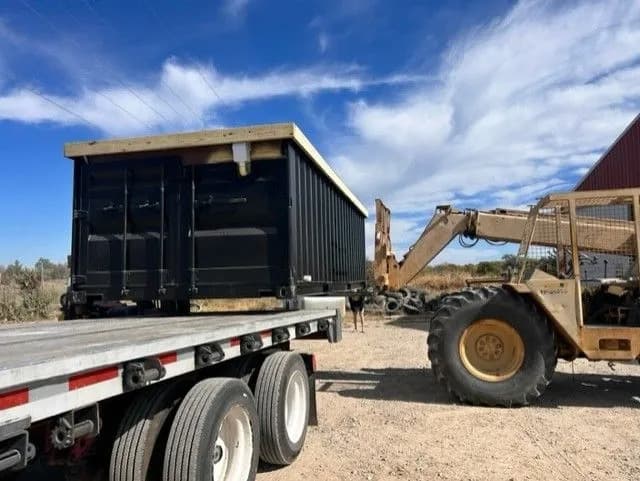
- Plan access: Ensure the delivery truck and crane can reach the installation site
The filled container pool weighs approximately 9 tons (18,000 lbs) but distributes less than 1 PSI across its base — lighter than a person standing on one foot.
Step 4: Arrange Delivery and Crane Service
Your container pool ships by truck and requires a crane for final positioning. The empty pool weighs approximately 5,400 lbs and has four corner castings for standard crane rigging.
- Coordinate delivery date with your crane operator
- Ensure clear overhead access for the crane
- Plan the crane position for optimal reach to the installation site
- Typical crane operation takes 15-30 minutes
Step 5: Install Electrical Service
Container pools require a dedicated electrical circuit:
- Circuit requirement: 110V to 220V, 30 Amp
- GFCI protection: Required for pool electrical safety
- Professional installation: Hire a licensed electrician
All internal pool electrical connections come pre-wired from the factory. A licensed electrician can typically install the dedicated circuit in under an hour.
Step 6: Fill and Start Swimming
Once positioned and connected:
- Fill the pool with a garden hose (takes several hours depending on water pressure)
- Prime and start the pump system
- Balance water chemistry
- Swim!
DIY vs Professional Installation
Many homeowners handle above-ground installation themselves with professional help only for crane operation and electrical work. In-ground installations typically benefit from professional excavation and site work.
Timeline Comparison
- Container pool: Swim same day to 1 week after delivery
- Traditional in-ground pool: 3-6 months construction time
Ready to get started? Contact Midwest Container Pools for a free quote and let us help you plan your installation.